Comforters provide a compact, insulating bedding layer designed to regulate temperature and deliver warmth without the bulk of additional blankets. In bedding literature, they are valued for evenly distributed fill, durable outer fabrics, and easy-care maintenance, which contribute to a consistent sleep surface. Key features to evaluate include fill material, weight rating, and fabric weave or thread count that affects loft and breathability.
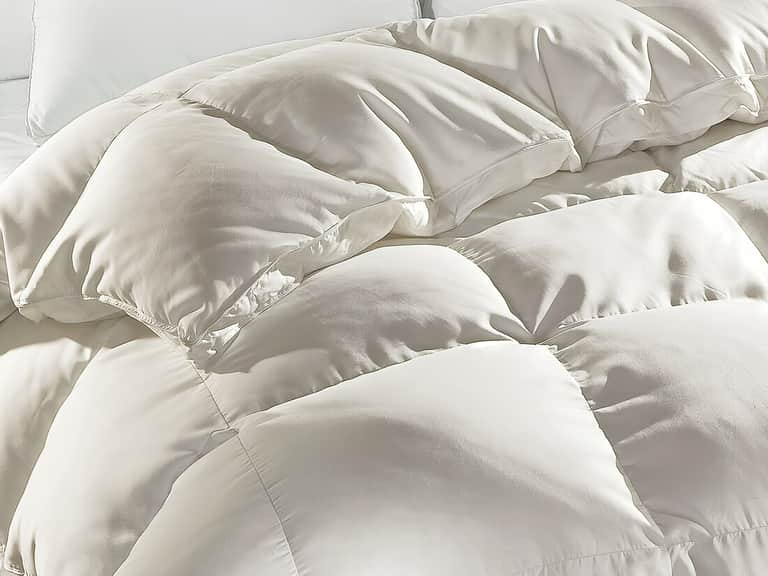
Down comforters, a common subtype, use lofted feathers for light, effective warmth with excellent heat retention. The Clean Bedroom Manhattan Goose Down Comforter typically emphasizes high fill power, enabling superior warmth-to-weight efficiency. Understanding fill power and feather quality helps determine suitability for seasonal use and personal preference for plushness or a crisper, cooler feel.
For comfort and longevity, attention to fabric construction matters. A tightly woven outer shell reduces feather migration and enhances durability, while a suture pattern or baffle box design helps maintain even distribution of fill. When selecting a down comforter, checking care requirements and potential allergies is important to ensure comfortable, long-term use within a bedroom setting.
In practice, a comforter is chosen based on climatic conditions, bed size, and individual warmth needs. Layering with ancillary bedding such as pillow configurations and duvet inserts can optimize sleep comfort without altering the core insulation properties. Bedding options like the Clean Bedroom collection often balance softness, loft, and structural integrity for consistent nighttime comfort.
Keywords such as bedding, comforters, down comforters, pillows, and down pillows reflect the broader scope of sleep-enhancing textiles. An informed approach considers fill type, loft stability, shell fabric, and care guidelines to assess how a comforter aligns with bedroom aesthetics, hygiene preferences, and seasonal temperature variations.
 Bedding